
Stories from Kerala
Here are some stories I heard the last time I was in Kerala
Guru Dev and the wounded tiger
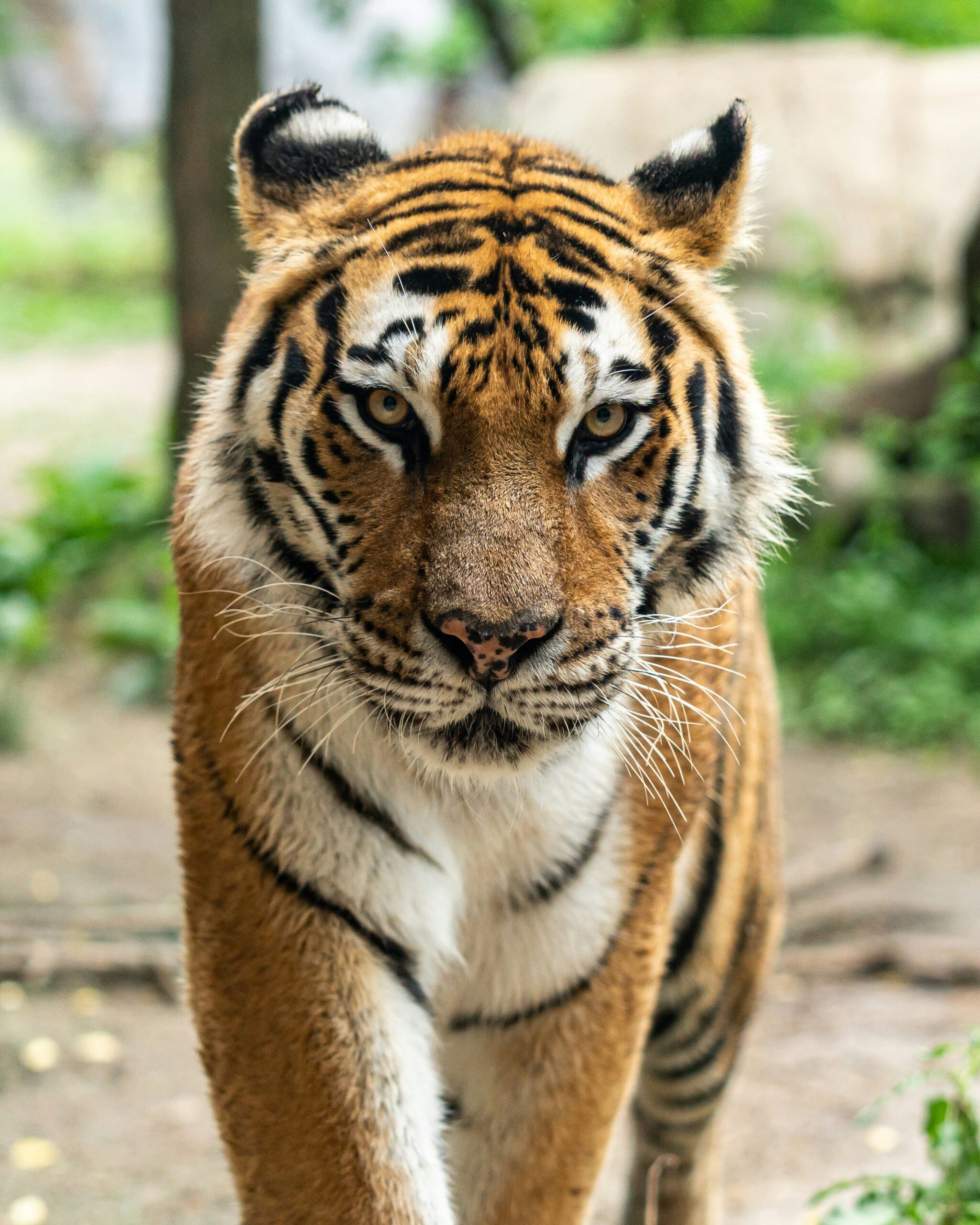
A tiger had killed over 100 people in northern India over a period of three years. The authorities then arranged for a famous tiger hunter to come from Nepal to track him down and shoot him.
The hunter came with a support team and was told where the latest sighting had been. He followed the spoor, found the tiger, took a shot and wounded the tiger, which limped off. He then followed the tiger, which wasn’t too difficult because of the drops of blood from his wound. Eventually they arrived at a clearing, where they saw the tiger with his head on a yogi’s lap.
The yogi was putting some water on the tiger’s head and talking to him in Hindi. ‘Now you have to stop doing bad things and killing people’. Then, after a while, ‘so now go’. The tiger got up, looked round at the hunter, and then ran off, completely healed.
The special thing about this account is that, according to the story, the yogi was Guru Dev, Maharishi’s teacher. Guru Dev spent many years in forests. The hunter later became President of Nepal and wrote about this experience in a published journal.
Jyotishi / Pandit performs yagya for kidnapped son
A meditator in South America came to her local TM Centre and despairingly reported the kidnapping of her son, aged 16. The kidnappers were demanding a ransom of many millions of dollars. If the kidnappers didn’t get this amount, they would start sending the parents bits of their son, until either they paid or the son died.
The TM teacher, who was also a keen student of Jyotish (Vedic astrology) contacted his Jyotish teacher in India. His teacher said that, provided the boy was still alive, he could do a yagya (traditional Vedic performance to help people at times of difficulty) for him and he would be released unharmed after about 20 days, with no ransom to pay.
The parents decided to go ahead with the yagya and waited. After 20 days nothing had happened so the teacher contacted the Jyotishi again. This time he said that he also needed to see the parents’ birth charts. After looking at the charts, he said that they too would need a yagya.
After the second yagya, news came in about suspicious activity in a house not far from the TM Centre. A lot of police were involved, plus a helicopter. It turned out to be the location where the boy was being held. They stormed the building, arrested the kidnappers and freed the boy.
Dr Balraj Maharishi in the Amazon jungle
In 1981, when Maharishi was starting to talk about Ayurveda, he organised for Dr Balraj Maharshi to go to the Amazon to look at plants. He went with a delegation of about 20 people, including Government Ministers, some scientists, and a tribal leader. Security personnel accompanied them as they were going into the jungle and there were potential risks from wild animals and hostile tribes.
As they walked in the jungle, Dr Balraj Maharshi would stop occasionally, point at a plant, and explain how it could be used to help cure some specific disease. As he did this, what he said was translated for the Government ministers and the tribal chief, Raoni Metuktire. After Dr Maharshi had done this a few times, the tribal chief became very angry. He started shouting, saying that this was some kind of a stitch-up, where traditional secret tribal knowledge of the plants was being publicly revealed.
In response, Dr Balraj Maharshi just quietly explained that the plants spoke to him and told him how they could help cure human diseases.
Some years later, Chief Raoni Metuktire travelled round Europe with Sting to raise awareness of the problems facing the Amazon jungle and its indigenous peoples (more about him: https://en.wikipedia.org/wiki/Raoni_Metuktire).
[I had the privilege of hearing Dr Balraj Maharshi speak during the ‘Pioneers of Perfect Health’ course near New Delhi in 1988 – it was extraordinarily liberating hearing about herbs that could help heal many intractable conditions].
Sri Laxmanju
Sri Laxmanju was a great and wonderful saint from the last century. Although he rarely left his ashram, he decided one time to travel to Delhi for a conference on Kashmir Shaivism, focusing on kundalini. He prepared a talk in Sanskrit and, when he arrived at the conference, asked the organisers if he could present it.
The organisers agreed and his talk, based not just on the Vedic texts but also on his personal experiences, inspired a standing ovation. The organisers then invited him to sit on the stage with the other dignitaries. One of them was a Mr Jha, who considered himself to be India’s foremost Kashmir Shaivism scholar. After the conference, Mr Jha wrote to Laxmanju and said that he was the leading expert on the subject and would come to his ashram – and challenged him to a discussion.
Laxmanju agreed, and some weeks later Mr Jha arrived. He wanted to begin the discussion immediately after arriving at the ashram. Laxmanju suggested that, as he had been travelling, they start by drinking tea, which they did, in silence.
At the end of 10 – 15 minutes, with no words spoken, Mr Jha prostrated himself in front of Laxmanju and said ‘you win’ – later becoming one of his most prominent disciples.
Shri Laxmanju – second story
A man came to visit Laxmanju at his ashram to ask him some questions. As they were talking – and also taking tea – Laxmanju leaned forward and poured a couple of drops of tea rose oil into the man’s tea. The man drank it and, as he was leaving, Laxmanju invited him to stay the night in the ashram as it was already late and there was no other accommodation nearby. The man accepted gratefully.
In the morning, when one of the ashram staff went to the guest’s room, he seemed ecstatic. He explained that he’d had a life-long problem with psoriasis. He had tried everything, and the only thing he could do was to cover up. So he always wore long sleeves and trousers. This morning when he had woken up, he found that the psoriasis had completely gone.